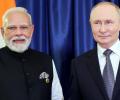
The Russian cabinet has cleared the signing of a memorandum of understanding (MoU) to deepen bilateral cooperation with India in civil nuclear energy during President Vladimir Putin's visit to the country.

The agreement provides for extensive cooperation in the civil nuclear energy sector including in research and development for peaceful uses of nuclear energy, they said.

The Indian government has introduced a bill to overhaul the civil nuclear sector, allowing private participation and establishing a new liability regime. The SHANTI Bill, 2025, aims to repeal existing acts and address industry concerns.

The Supreme Court has issued a limited notice to the Centre, seeking clarification on whether courts can grant fair compensation under the SHANTI Act in nuclear accidents, despite liability caps. The court also questioned potential conflicts of interest in appointing members to the Atomic Energy Regulatory Body under the Act, following a plea challenging the law's constitutionality.

India will be identifying and separating its civilian and military nuclear facilities and programmes in a phased manner.
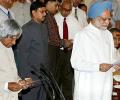
The landmark India-US civil nuclear deal of 2008, brokered during Manmohan Singh's tenure as Prime Minister, is seen as a crowning achievement in his foreign policy legacy. The agreement ended India's nuclear isolation, fostered a strategic partnership with the US, and opened doors to advanced technologies and defense cooperation. This historic deal also laid the groundwork for India's engagement with the global nuclear community.
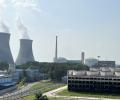
Government sources said amendments were being considered to the Atomic Energy Act to allow private sector participation and the Civil Liability for Nuclear Damage Act to limit the liability on suppliers of equipment to build atomic energy plants.

India and Australia have signed significant agreements covering civil nuclear energy, maritime security, and critical minerals, reinforcing their partnership's role in ensuring a peaceful Indo-Pacific. The pacts facilitate uranium supply from Australia to India and enhance cooperation in defence, cyber, and critical technologies.

The rules require nuclear plant operators to maintain an insurance policy, financial security or a combination of both to cover civil liability for nuclear damage.

India's nuclear energy share in total installed capacity remains limited, fluctuating between 1.9 per cent and 2.9 per cent from FY10 to FY24.
Both countries have always supported the peaceful use of civil nuclear energy and an agreement in this connection is expected to be signed during the President's visit to China which began Tuesday, Ambassador Masood Khan said. The two countries will ink several agreements in the fields of technology, agriculture and minerals. They will also sign an investment protocol to their existing free trade agreement to boost investments in Pakistan, he told Geo News channel.
India and South Korea have reached an agreement on civil nuclear cooperation.
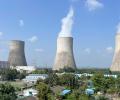
The Bill is likely to pave the way for amending two existing legislations -- the Atomic Energy Act 1962, and the Civil Liability for Nuclear Damage Act 2010.
India and France have finalised negotiations to arrive at a bilateral agreement on cooperation in civil nuclear energy, Prime Minister Manmohan Singh said in New Delhi on Friday. After holding a meeting with visiting French President Nicholas Sarkozy, Dr Singh told mediapersons that India and France have agreed to strengthen cooperation in counter terrorism.

India and Canada solidify their partnership with a landmark uranium supply agreement and discussions to finalise a comprehensive economic partnership, signaling stronger ties and cooperation on key global issues.
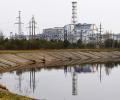
The Supreme Court is reviewing a plea challenging the 2025 SHANTI Act, which caps liability at Rs 3,000 crore for nuclear plant incidents, raising concerns about victim compensation and operator accountability.

The operator's liability in the case of an incident is limited to 3,000 crore for reactors with thermal power above 3,600 Megawatt; 1,500 crore for reactors with thermal power between 1,500 Mw and 3,600 Mw; 750 crore for reactors with thermal power between 750 Mw and 1,500 Mw; 300 crore for reactors with thermal power between 150 Mw and 750 Mw; and 100 crore for reactors having thermal power up to 150 Mw, fuel cycle facilities other than spent fuel reprocessing plants and transportation of nuclear materials.
With business worth billions of dollars to be gained from India, American groups are working overtime to facilitate the United States' participation in the Asian powerhouse's nuclear sector, says a Washington Post report.

Australia's Prime Minister Tony Abbott on Friday said he will sign an agreement with India to sell uranium for non-weapon use. "Prime Minister Modi and I will today sign a nuclear cooperation agreement that will finally allow Australian uranium to India," he said while addressing a meeting, organised by industry chambers including CII and Ficci.
Russia has offered India cooperation in localising large and small nuclear power plants as part of a civil nuclear energy collaboration between the two countries. The offer was made during a meeting at the IAEA General Conference in Vienna.
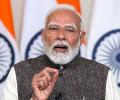
India on Saturday announced plans to amend its nuclear liability law and set up a nuclear energy mission, a move that came ahead of Prime Minister Narendra Modi's likely visit to the United States.
Researchers at IIT Guwahati have developed a method to enhance cement mortar, making it stronger, more durable, and capable of blocking harmful radiation, with the goal of improving the safety of nuclear facilities.

An innovation roadmap, a mechanism to double annual bilateral trade within next five years, and a joint artificial intelligence framework were among 13 outcomes to emerge from wide-ranging talks between Prime Minister Narendra Modi and President Emmanuel Macron on Sunday.

Prime Minister-designate Nawaz Sharif on Thursday sought civil nuclear technology to overcome Pakistan's energy crisis during a meeting with Chinese Premier Li Keqiang.

Amidst global energy market volatility driven by the West Asia crisis, Russia has proposed increasing its crude oil and natural gas supplies to India, strengthening bilateral energy ties and aiming for USD 100 billion in annual trade by 2030.

US Secretary of State Marco Rubio says relations between India and the US have not lost momentum and are set to strengthen, with hopes for a trade deal soon.
"The Obama administration has favoured new international civil nuclear-energy architecture, an architecture that allows countries around the world to benefit from the peaceful uses of nuclear energy without increasing proliferation risks," said Robert J Einhorn, Special US Advisor for Nuclear Non-Proliferation and Arms Control.
France on Thursday said it wanted to increase civil nuclear cooperation with India, but only after New Delhi implemented the legal framework. ''We want to move further, but first we need India to sign an agreement with the nuclear watchdog, International Atomic Energy Agency, and also to negotiate the exemption agreement with the Nuclear Suppliers' Group,'' visiting French Minister for Higher Education and Research Valerie Pecresse told a press conference in New Delhi.

Indian and American experts on Wednesday held detailed discussions on a range of implementation issues, including administrative, liability, technical and licensing matters to advance the operationalisation of Indo-US civil nuclear cooperation that has been in limbo for past 9 years.
'Romania fully understands and supports India's intention to expand its possibilities to generate civil nuclear power.'
Ushering in reforms, Union Finance Minister Nirmala Sitharaman on Saturday proposed to open up the nuclear power sector for private players and announced a Rs 20,000 crore Nuclear Energy Mission for research in the field, with an aim to set up five small and modular reactors by 2033.

In many ways, this is only the beginning -- of a new chapter in India's nuclear story, and of a future where its vast thorium reserves could finally power its ambitions.

India has a 'natural global partnership' with US, says PM.

India and Canada are negotiating a long-term uranium supply agreement worth $2.8 billion. They are also exploring expanded civil nuclear cooperation after the passage of the SHANTI Bill.
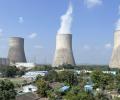
In a significant move, the United States on Wednesday removed restrictions on three Indian nuclear entities, over a week after National Security Advisor Jake Sullivan announced that Washington was finalising steps to 'remove' hurdles for civil nuclear partnership between Indian and American firms.

The Indian Nuclear Energy Pool, meant to insure risks from nuclear reactors, may take longer to be set up. While the idea of forming a pool was mooted earlier this year, it has reached a deadlock owing to differences among the stakeholders on certain clauses.
Hours after Pakistan Prime Minister Yousuf Raza Gilani said that his country "qualifies" for a civilian nuclear deal with the US, like that of India, the Obama Administration in a blunt message told it that such a deal is not on platter of its talks with Islamabad.

The United States and India are on the verge of finalising a landmark bilateral trade deal, aiming to boost trade to USD 500 billion by 2030, according to US Deputy Assistant Secretary of State Bethany Poulos Morrison. The agreement seeks to open India's 1.4 billion-strong market to American goods on reciprocal terms, with ongoing high-level discussions to recalibrate the pact after recent changes in US tariff policy.
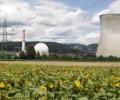
Civil nuclear projects in the country would be subject to Indian laws including on issues of civil liability, National Security Adviser Shivshankar Menon said on Friday dismissing reports of attempts to dilute the liability clause in contracts proposed with United States firms.
He said there is a need to pave the way for India to benefit from nuclear power without restrictions.
